
I recently got third installment in the new Lucky Peach mag series. I can’t wait to read it, but I’ve got loads of other things in queue before I can dedicate some time to reading it. The first issue with a chicken on it (so creative!) was grand. I only hope this issue is just as good. Upon thumbing through it, I did notice a recipe for “Two-Minute Chocolate Mug Cake” on page 83. My interest is certainly piqued.
Much Ado About…Dill
There have been many times when I have bought items for a dish and have been left with odds and ends, wondering what to do with them. Dill is a perfect example. Here are my suggestions:
Tzatziki
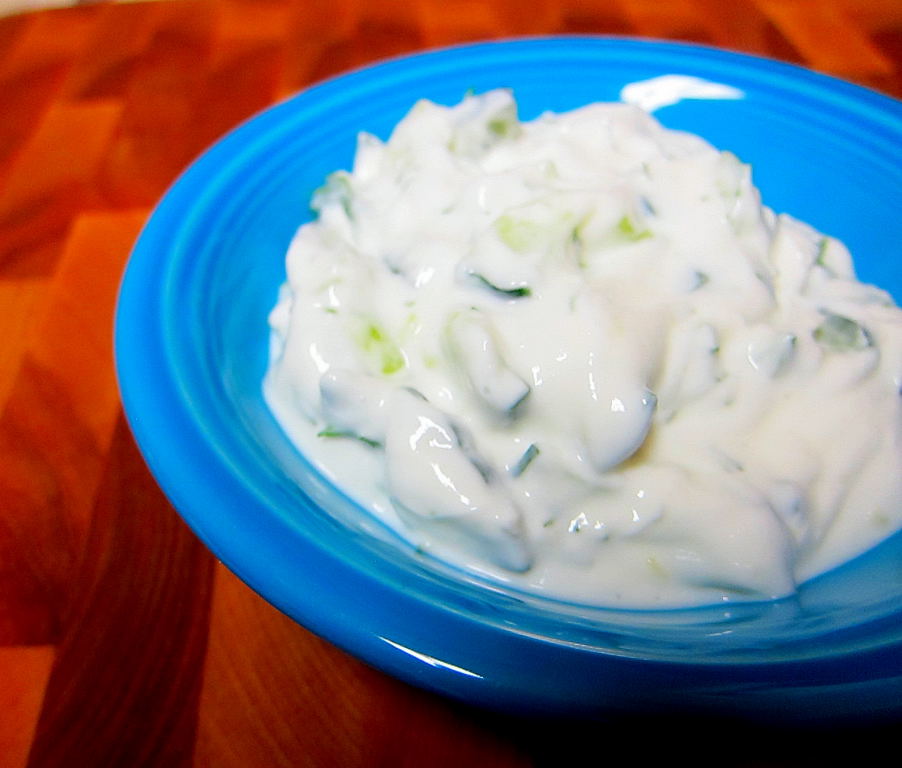
You’ll need:
- 16 ounces of Greek yogurt (I prefer non-fat yogurt)
- half of a Hot House cucumber (about 5-6 inches)
- 2 tablespoons of dill, chopped
- 1/2 teaspoon of salt
- one garlic clove, minced
- 1 tablespoon of lemon juice (optional)
First, thinly slice the cucumber and sprinkle 1/4 of a teaspoon of salt on the slices. Alternatively, you could also grate the cucumber. I like a little more texture so I prefer having big chunks of cucumber. Set the cucumber aside for an hour. When the hour is up, squeeze as much moisture out of the slices as you can. From here you can either chop the slices into quarters or small matchsticks.
Next, combine the yogurt, cucumber, dill, 1/4 teaspoon of salt, and garlic in a bowl. You can add one tablespoon of lemon, but I feel as if there is enough tartness with the yogurt that I don’t need to add the lemon juice. You can also add 1/2 a tablespoon of olive oil, but I think the tzatziki is still great without it.
My first-born child (a.k.a., my sourdough starter)
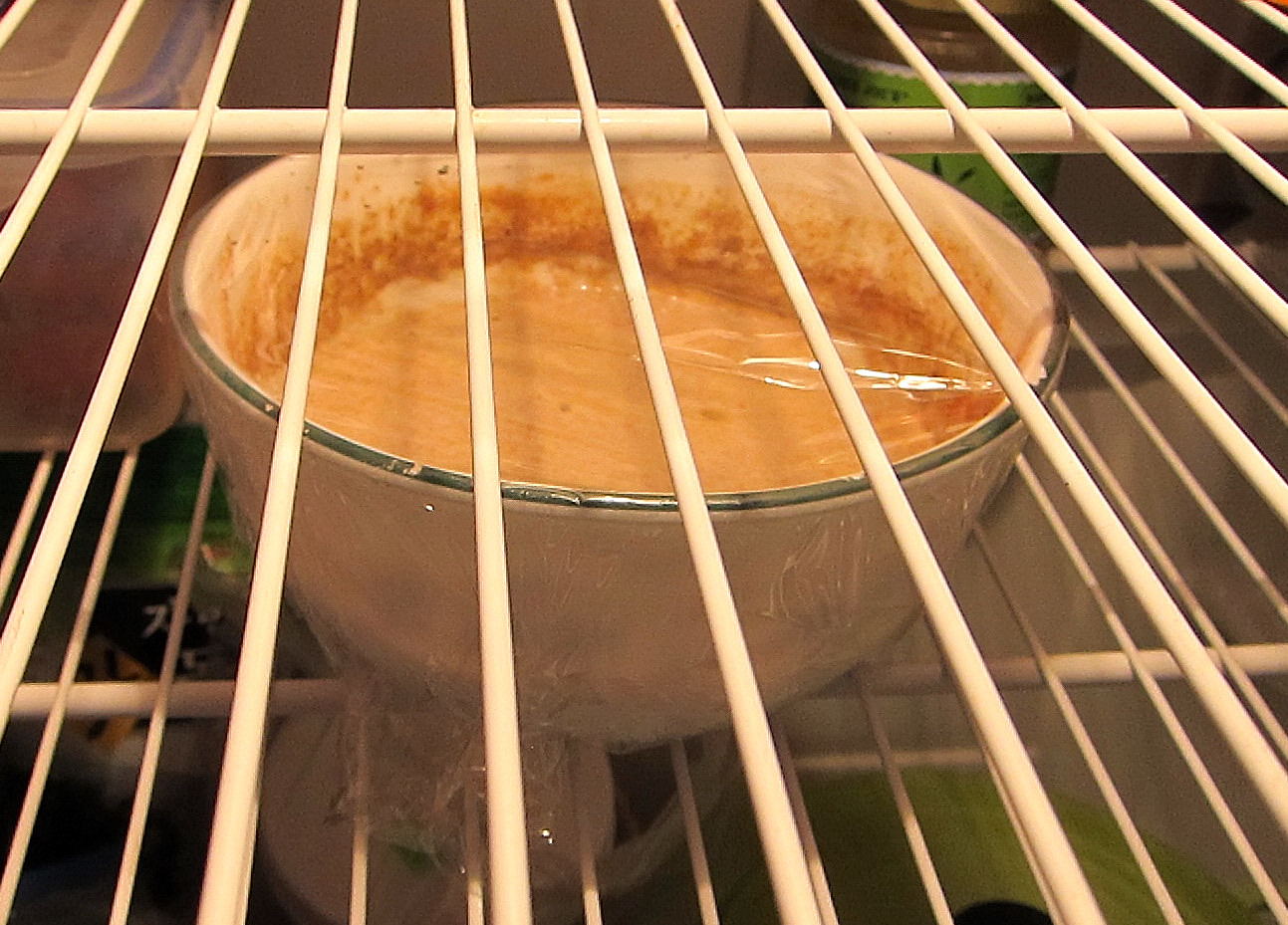
This may look like a jail sentence for my sourdough starter, but I assure you, it is quite happy. The story of my starter began as a tale of woe, but after a much needed boost of productive starter from a friend, we were on our way.
Friends warned me that I should not expect my sourdough bread to actually taste like real San Francisco sourdough bread. I kept that in the back of my mind, but I secretly hoped that the flavor would at least bear some resemblance. Many attempts later I can say with confidence that I was wrong, and everyone else was right.
I began coddling my starter in mid-December. I should have known this was a fool’s errand in mid-December given the fact that my apartment is almost always colder inside than it is outside. This makes for bearable summer-time conditions, but during the winter I end up having to sleep with a hat and 2 layers on. Ridiculous, I know. (Yes, I have a heater, but it’s just a wall heater in an inconvenient location in my house.) To be expected, my starter hated the North Pole-like conditions in my apartment just as much as I did. Nonetheless, I kept adding flour to it, and just for good measure I took a dual-pronged attack by cultivating two starters – a whole wheat flour and a white flour starter. For a good 2 weeks I was caught in a frenzy of fretting over the lack of activity in my starters and the need to keep feeding it as my only way to cope. This led to creating a Jabba the Hut size amount of starter and the consumption of a LOT of flour, but with no bubbling action going on. A whole rack of my refrigerator had been taken over, in fact. Things were out of control. I even tried to warm up the starter by putting it under a heating blanket. I probably even sang to it at one point.
And then, my friend gave me some of his starter and lent me The Bread Baker’s Apprentice by Peter Reinhart. Us baker’s north of San Francisco have to hope that whatever yeasty particles that are naturally floating in the air actually make it into our starter, and that isn’t much. To fix this, Reinhart says to mix in pineapple juice in the starter. Brilliant – it worked. Since then, I have been able to dump most of the original starter and just coddle this one bowl.
Today I pulled out some starter from my refrigerator and have started to build it up until I have 2/3 cup for this recipe taken from The Bread Baker’s Apprentice. It’s still a bit chilly in my apartment so I haven’t quite yet abandoned the need to use a heating blanket, but at least my starter is happy.

It's toasty in here!
Oozy Delice du Jura and Olive Bread
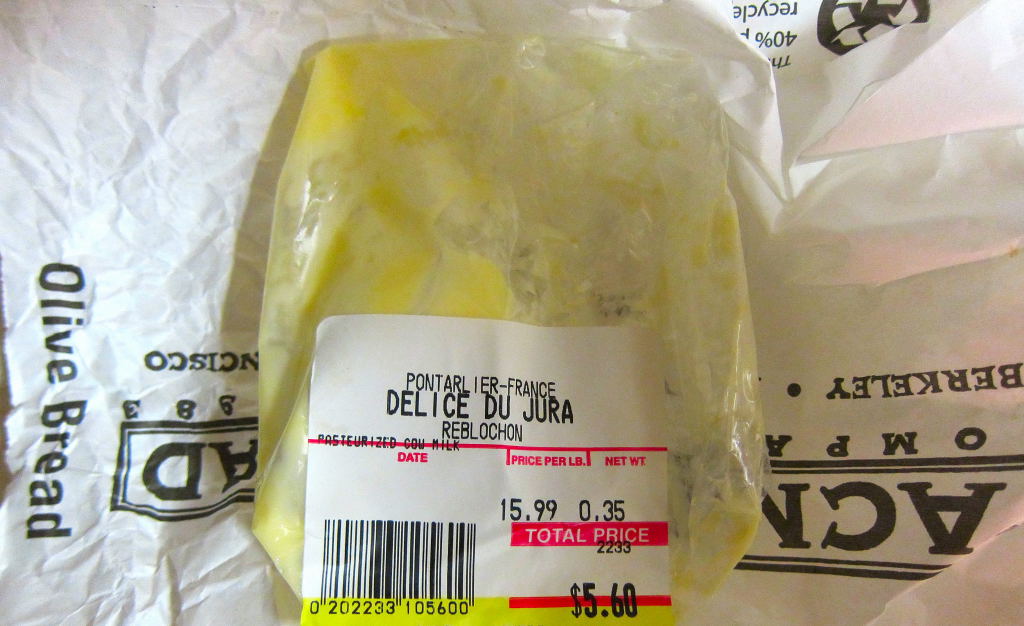
Delice Du Jura is a wonderfully soft and oozy french cheese from the Jura region in France and is similar to its relative, Reblochon, which is not available in the US due to pasteurization laws. This cheese is cellar or cave-aged and is washed with brine or whey every few days to facilitate the soft rind on the cheese. This cheese smells much stinkier than it actually is in taste and has a creamy texture with a mild nutty flavor. For me, the stinkier the better, but I was overcome by the velvety spread of the cheese to be too upset. With some olive bread from Acme, it was a fabulous pair with the occasional tang of the olives in the bread.
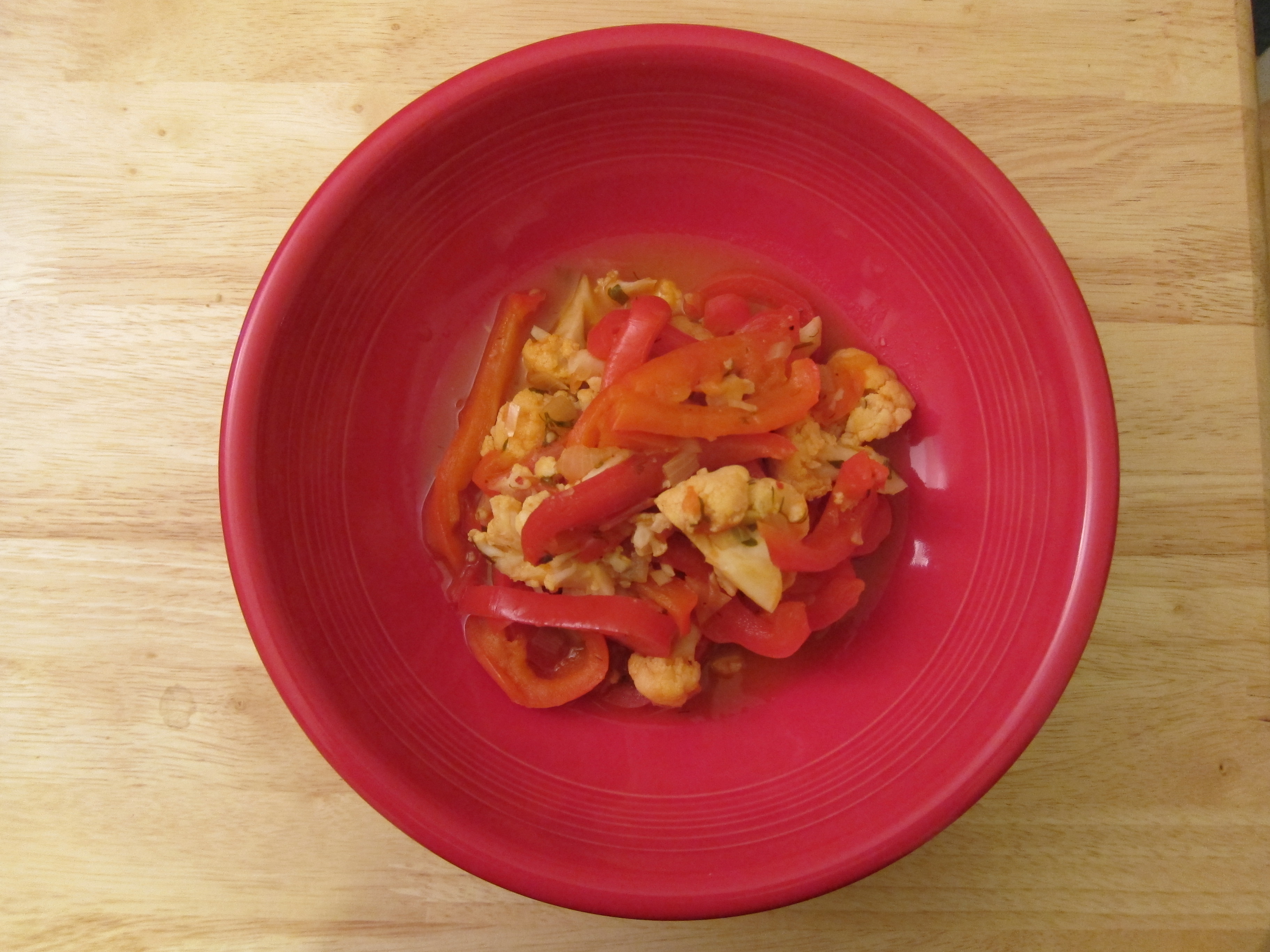
Cauliflower Moussaka
“Training is everything. The peach was once a bitter almond; cauliflower is nothing but cabbage with a college education.” Mark Twain, “Pudd’nhead Wilson”
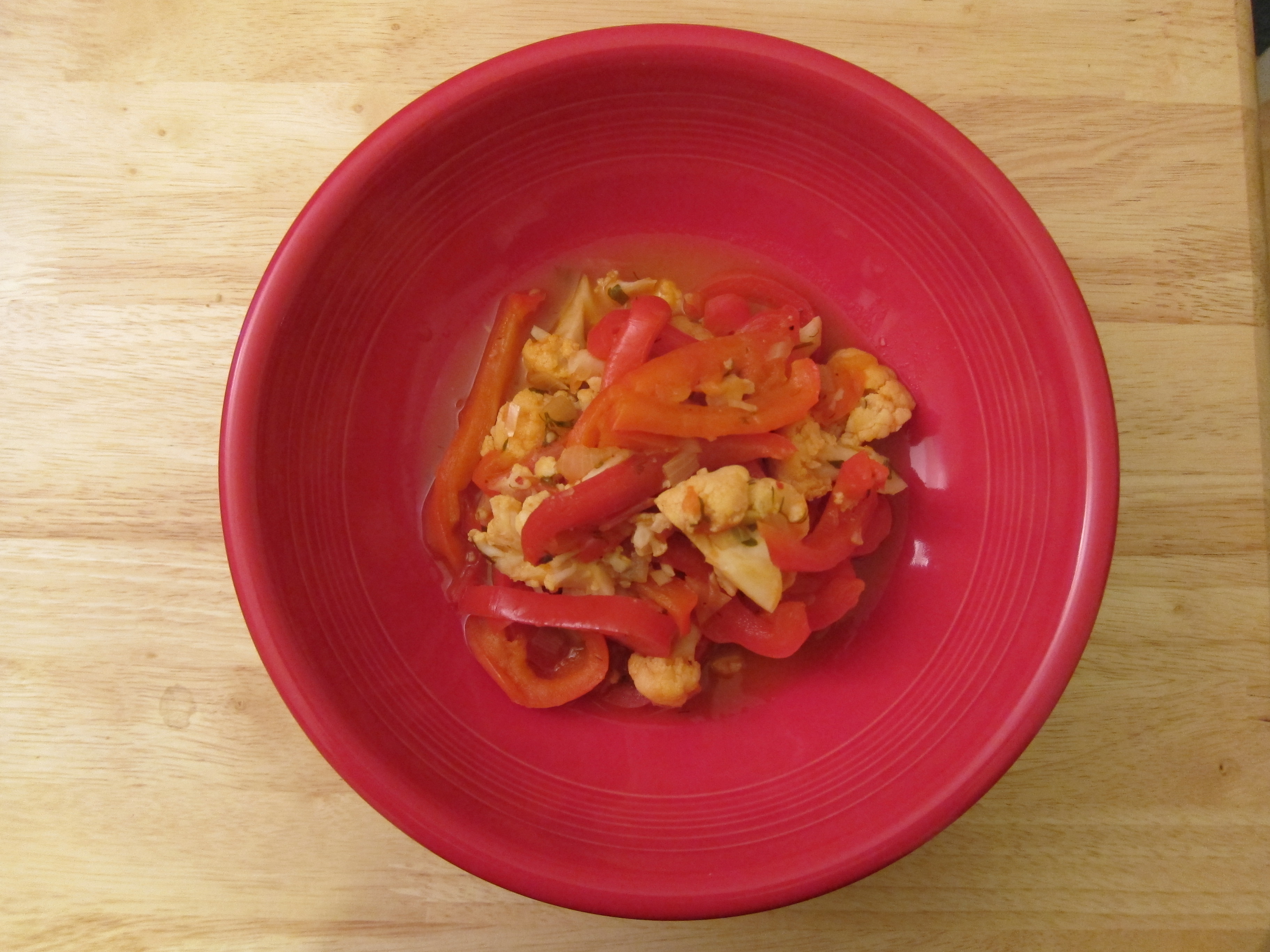
Cauliflower is like an unsung hero of the vegetable world. Originally from Cyprus, it comes in different colors (white, green, orange), signifying the different varieties. While you can find purple-hued cauliflower, such cauliflower is actually a type of broccoli that appears purple and turns green when cooked. It is low in carbs, high in dietary fiber, and includes nutrients that cleanse the body of free radicals. Make sure to look for cauliflower heads with crisp leaves.
Here is a veggie-friendly variant of moussaka. For it, you will need:
- 1 large head of caulflower, sliced into florets
- 1 small yellow onion, chopped
- 2 cloves of garlic, minced
- 1 tablespoon of tomato paste
- 2 medium green or red bell peppers, cut into thin slices
- 2 medium tomatoes, chopped (1 1/2 cups)
- 1/4 to 1/2 teaspoon of red pepper (modify to your taste)
- 1 tablespoon of dill, finely chopped
- 1/4 cup of parsley, finely chopped
- 1 1/2 cup of vegetable stock
- Salt and pepper to taste
- 1 tablespoon of olive oil
- 2 tablespoons of lemon juice (added at the end)
Blanch the cauliflower florets in salted boiling water for 4 minutes, then drain and place aside. Next, heat a tablespoon of olive oil over medium-high heat, preferably in medium to large-sized pan. Saute the onion and garlic for 2 minutes until soft. Add in the florets, peppers, tomatoes, red pepper, dill, parsley, tomato paste, and stock. Season with salt and pepper as desired.
Bring the mixture to a boil and then reduce to a simmer for 30 minutes. After turning off the heat, add in the lemon juice.
This dish can be served with rice, quinoa, or any other whole grain you prefer.
Recipe for Maklouba: Upside Down Chicken and Eggplant Dish | Legal Nomads
Recipe for Maklouba: Upside Down Chicken and Eggplant Dish | Legal Nomads.
Taking inspiration from this recipe posted on the Legal Nomads website, I made Jordanian Maklouba, which literally means “upside down”. This dish was fantastic and is marked by the use of baharat or “7 spices” – a happy marriage of, you guessed it, 7 spices. I ended up omitting the eggplant from this recipe, but it was still delicious, nonetheless, and my entire house smelled like a wonderful spice market. I think you can easily make this into a vegetarian recipe by leaving out the meat entirely and using vegetable stock to cook the rice. The next time I make this recipe I plan to roast the eggplant and cauliflower to add a nice sweetness to the dish.
Once building my pot, it was filled to the brim and looked like this:
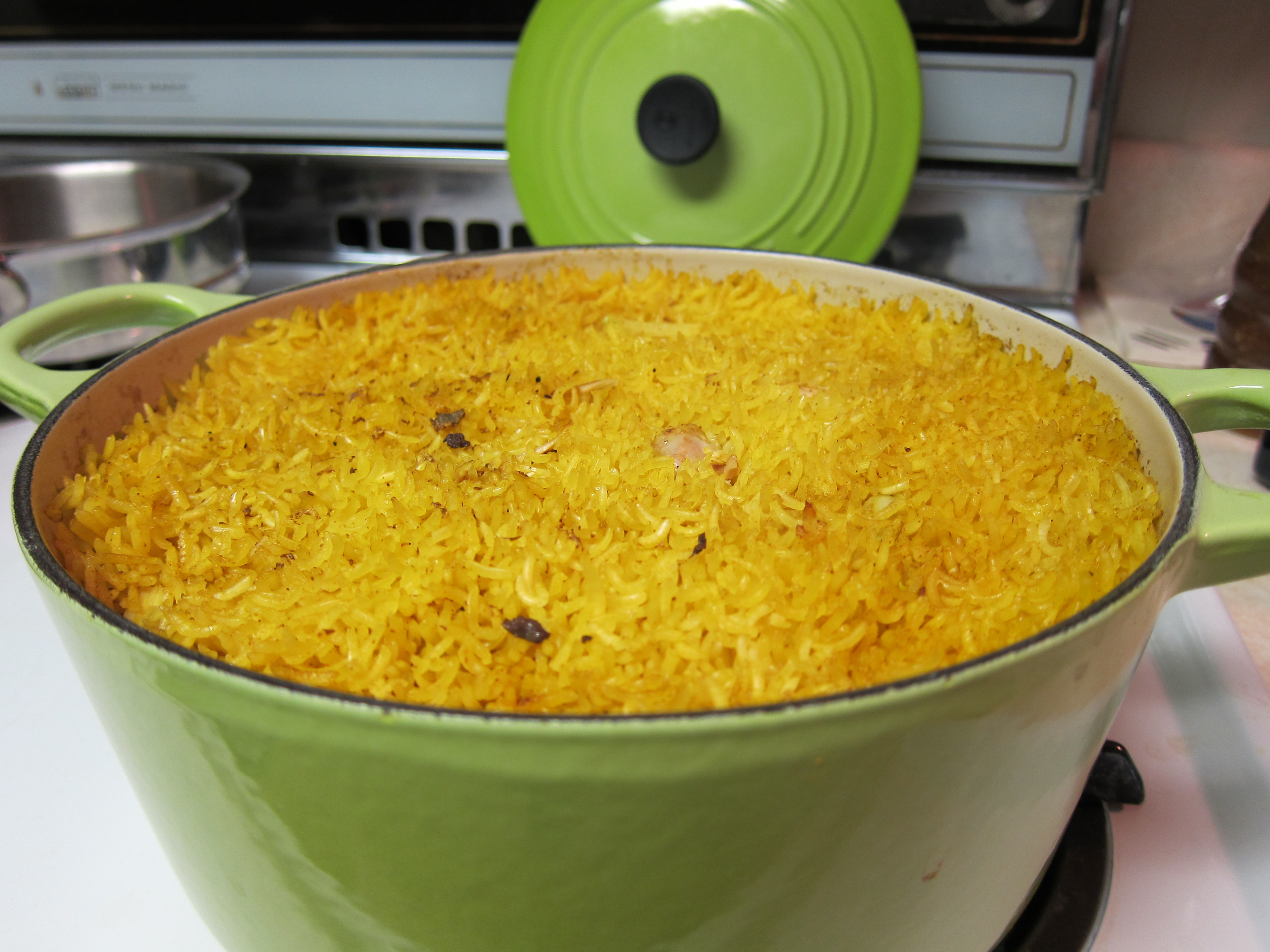
As I realized, there is an art to making maklouba. You can be very creative and make fun patterns with your veggies. I added carrots to the bottom for some flair.
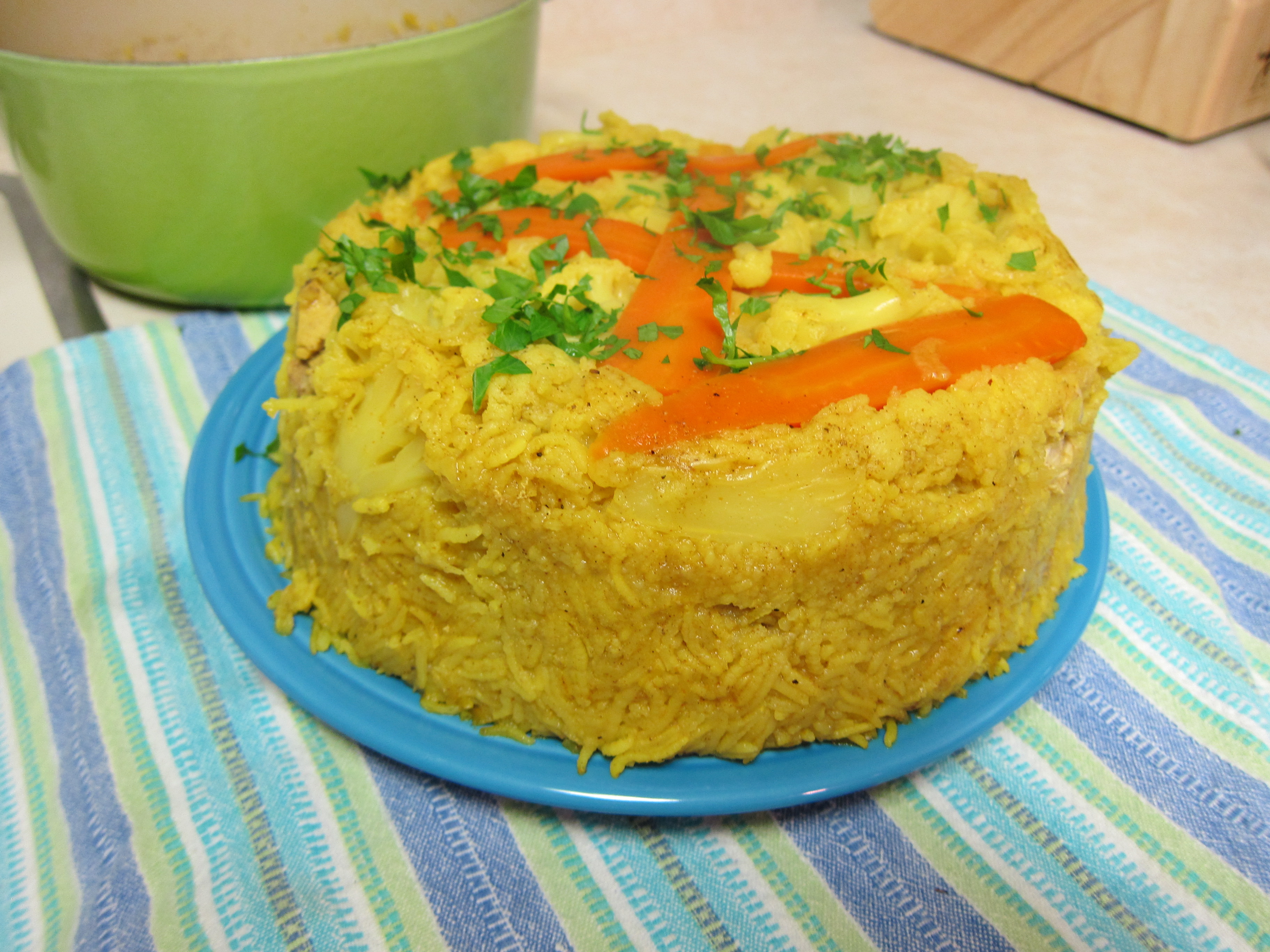
I definitely recommend using a large enough plate to flip the maklouba from the pot, which I foolishly did not do here.
To make 1 cup of the baharat, I mixed the following:
- 2 tablespoons of black pepper
- 1 tablespoon of ground coriander
- 1 tablespoon of ground cinnamon
- 1 tablespoon of ground cloves
- 1 1/2 tablespoons of ground cumin
- 1/2 teaspoon of ground cardamom
- 2 teaspoons of ground nutmeg
- 2 tablespoons of paprika
The maklouba recipe only calls for 1 tablespoon of baharat so I stored the remainder in an air-tight container to be used again for my next round of maklouba.
About
When I was a kid, my dad would give me quasi-motivational speeches about how to be a good student. That all sounds normal. But, my dad threatened me into studying by telling me that if I did not get good grades, then he would just buy me a sandwich shop and I could live out my days slaving over a panini press. Only with hindsight can I say that I was a fool for not taking him up on his offer. I’m pretty sure the offer has lapsed by now.
Ultimately, this blog is about food, travel, and the adventures, thoughts, and musings stemming from both. Aside from that, it is a nod to the fact that life goes on after cancer as well as a dedication to those who are affected by this terrible disease. I am a young cancer survivor with a goal of eating my way through every type cuisine on the planet. So, while I intend to focus on healthy foods, there will be an occasional slip over to the dark side. By the dark side, I mean, of course, dessert.
via About.
 Eat - Drink - Roam